Water and Salt
For thousands of years, the Jordan River has been more than just a river. It has been a source of life, a crossroads of cultures and a sacred symbol for Jews, Christians and Muslims. Yet today, this vital waterway is drying up. More than 90% of the Lower Jordan River's natural flow has been diverted by Israel, Jordan and Syria for agricultural and domestic use.
The Dead Sea, once fed by the Jordan's waters, is disappearing at an alarming rate. Its water level has been falling by more than a metre each year, while industrial mineral extraction has further accelerated its decline. As the shoreline retreats, freshwater dissolves underground salt layers, creating cavities that eventually collapse into sinkholes. Thousands have appeared along the coast, destroying roads, palm groves and infrastructure.
But the story of water in this region extends far beyond the disappearing sea. From ancient water channels in Petra to rooftop storage tanks in Amman and irrigation systems in the Wadi Araba desert, water has shaped both the landscape and the lives of those who inhabit it.
Water and Salt is an ongoing documentary project exploring the ecological collapse of the Dead Sea and the complex relationship between people and water in one of the world's most water-scarce regions.
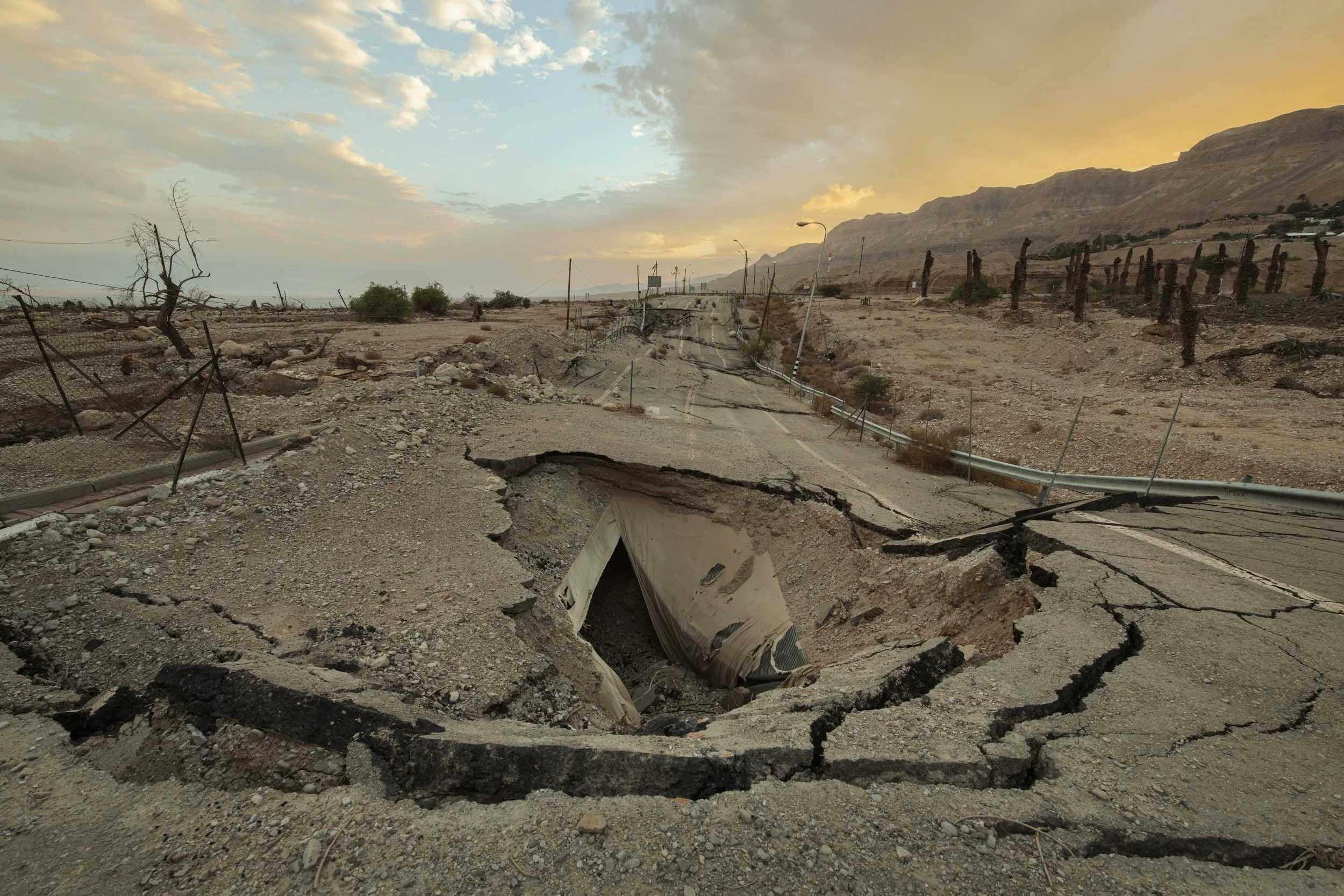
A section of road that collapsed as a result of sinkhole formation near Ein Gedi, on the western shore of the Dead Sea.
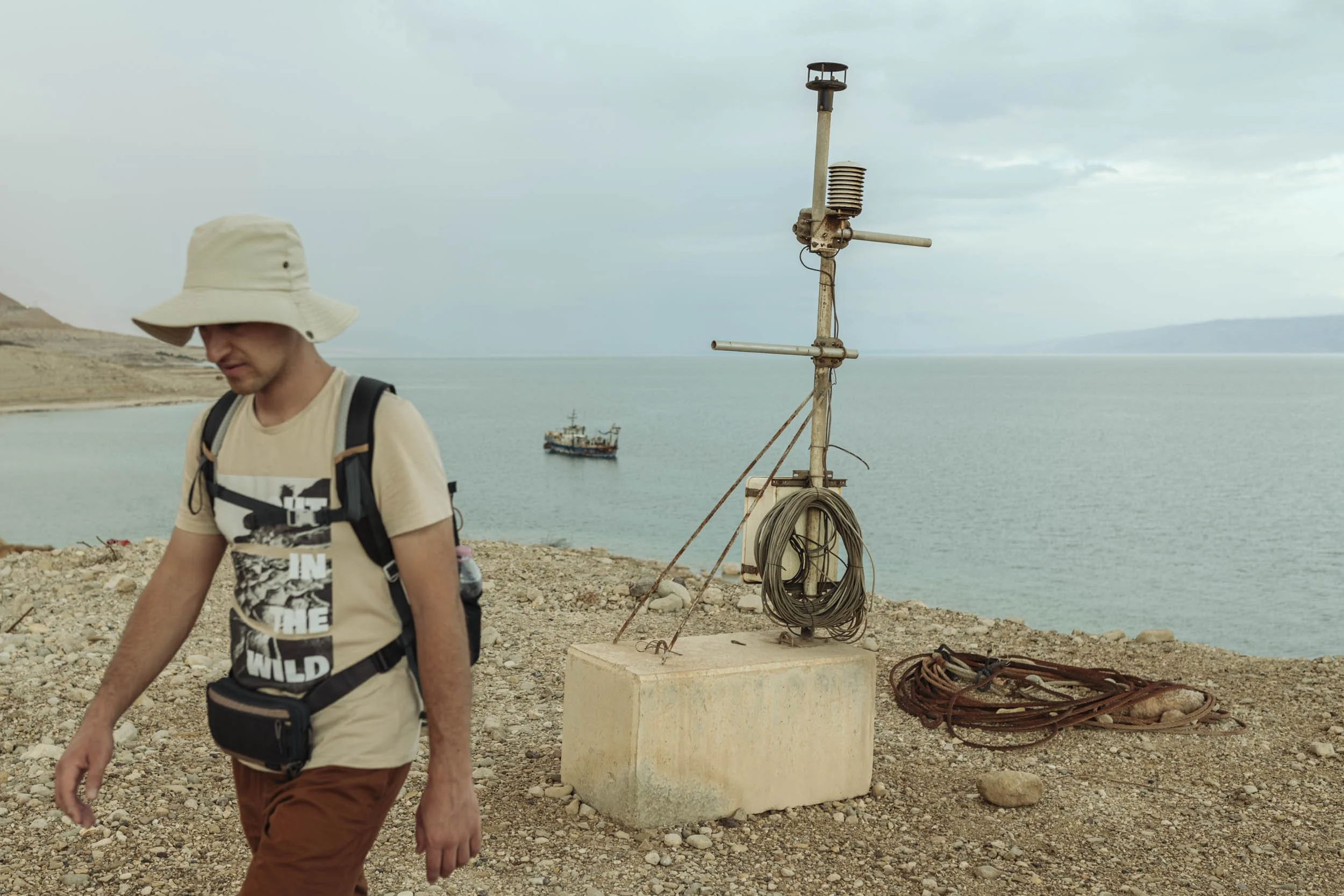
An abandoned monitoring station on the shores of the Dead Sea.
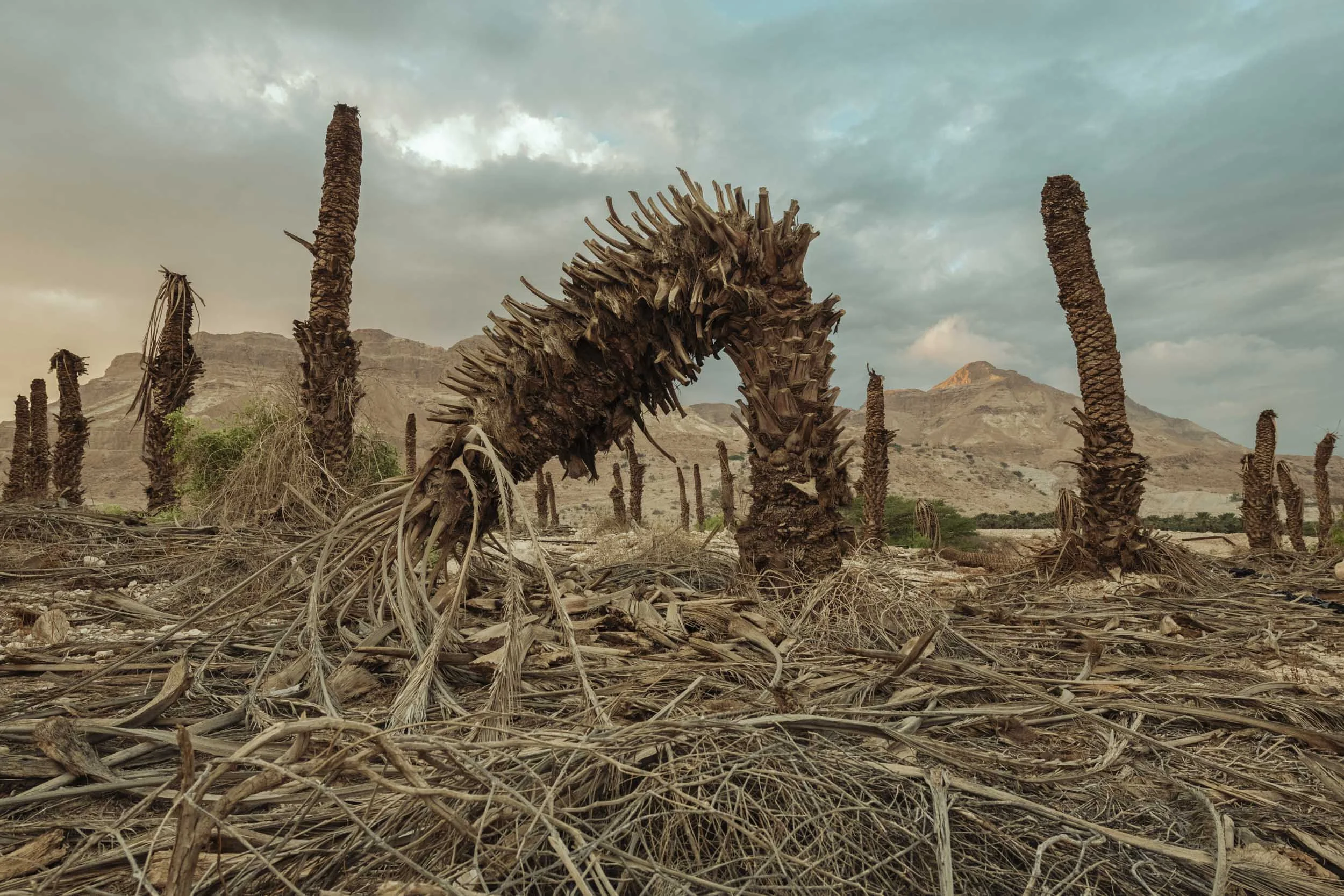
A dried-out palm plantation near the Dead Sea, Israel.

A view of the Dead Sea from the ancient fortress of Masada, Israel.
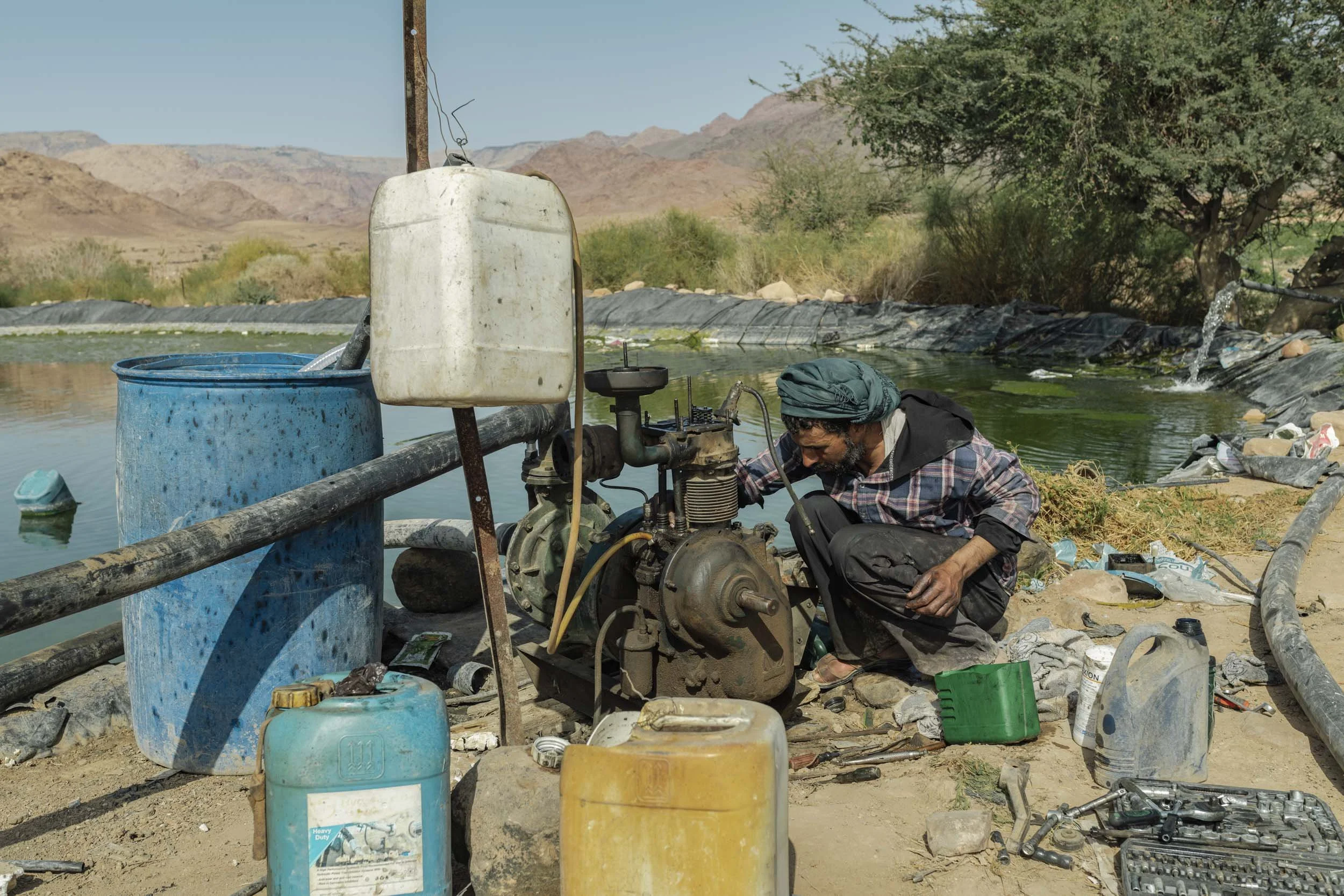
Mohammed repairs an irrigation system and water pump at a watermelon farm in the Wadi Araba desert, Jordan.
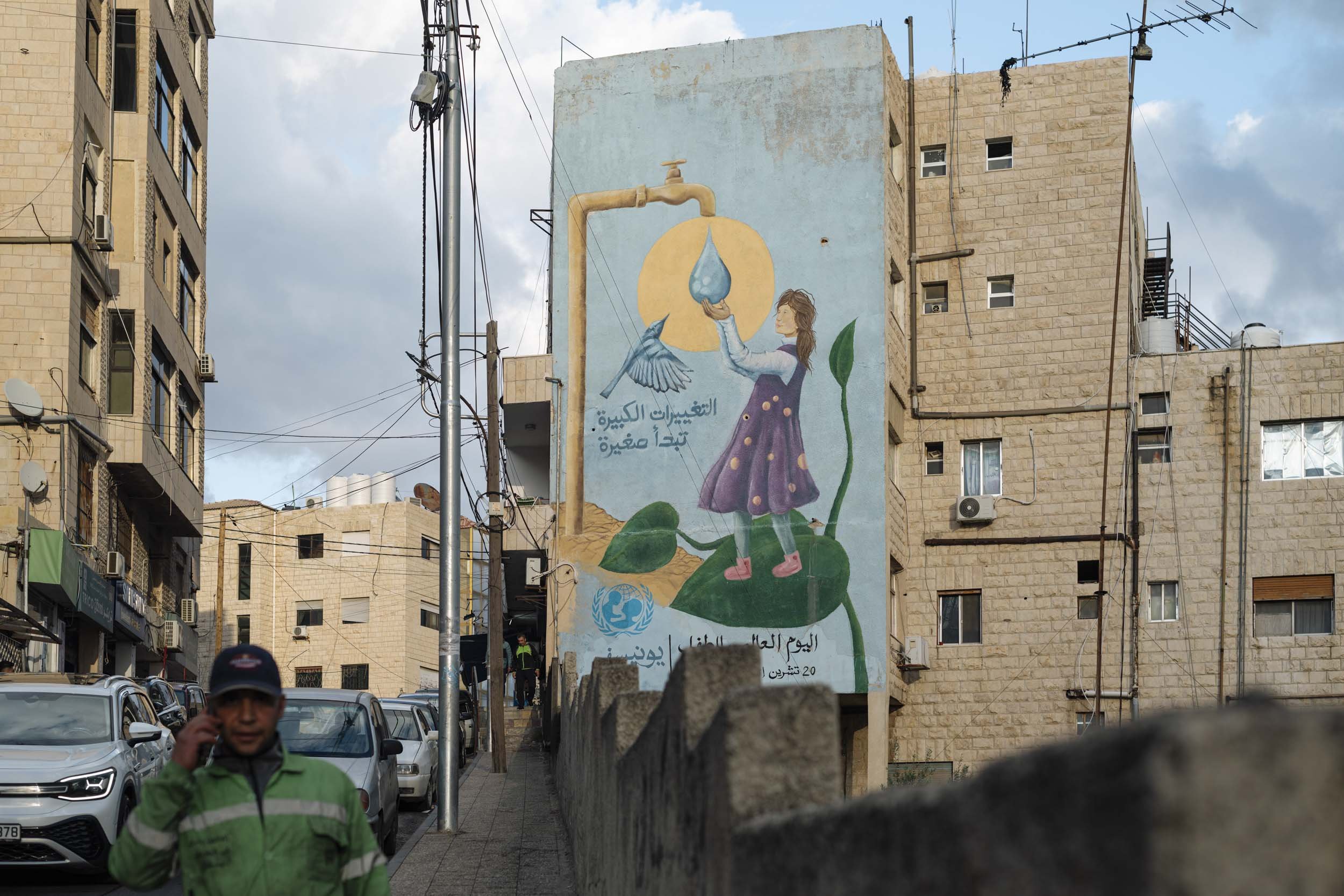
A mural in Amman, the capital of Jordan, bears the message: “Big changes start small.”
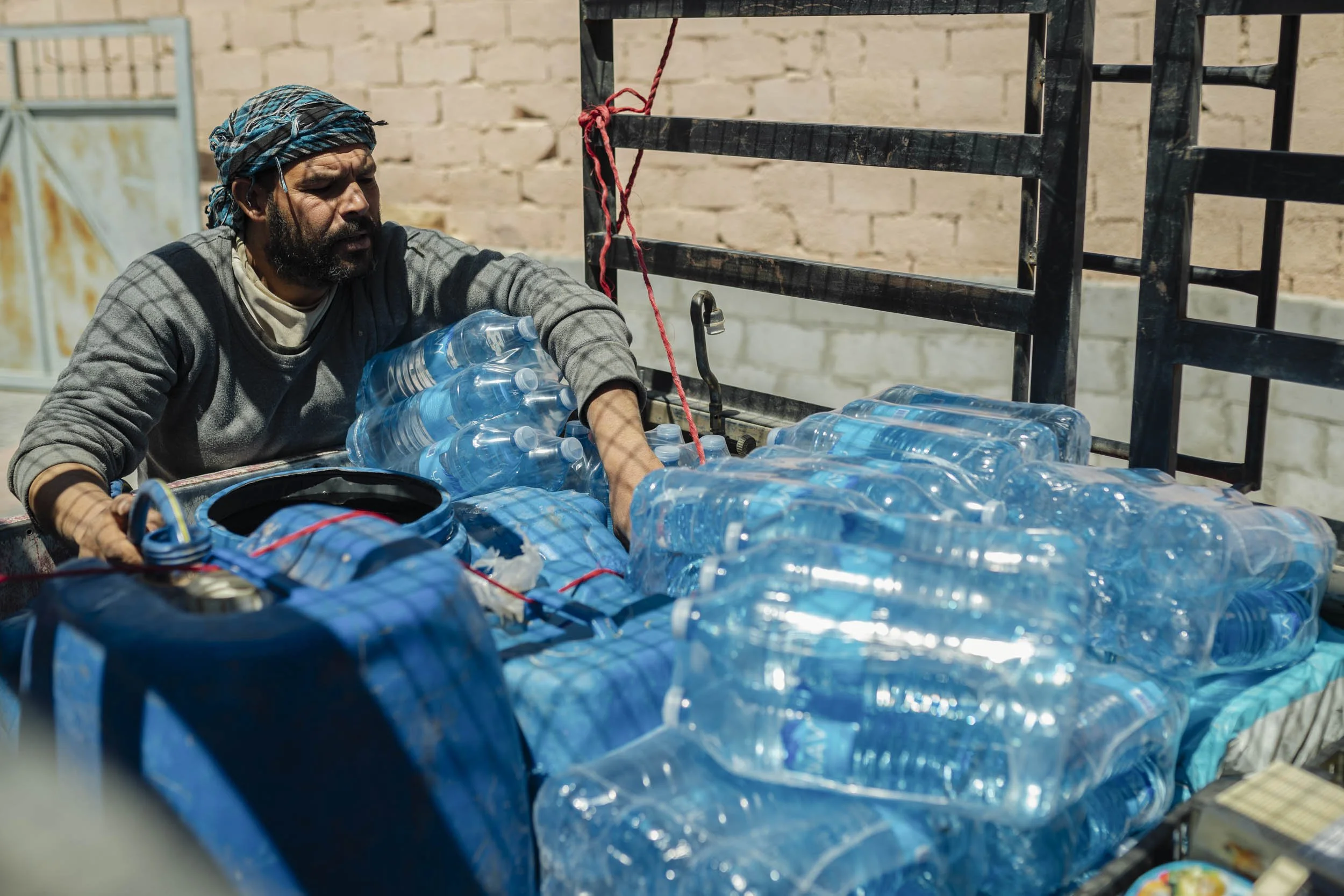
Essam loads water onto the back of a jeep near Petra, Jordan.
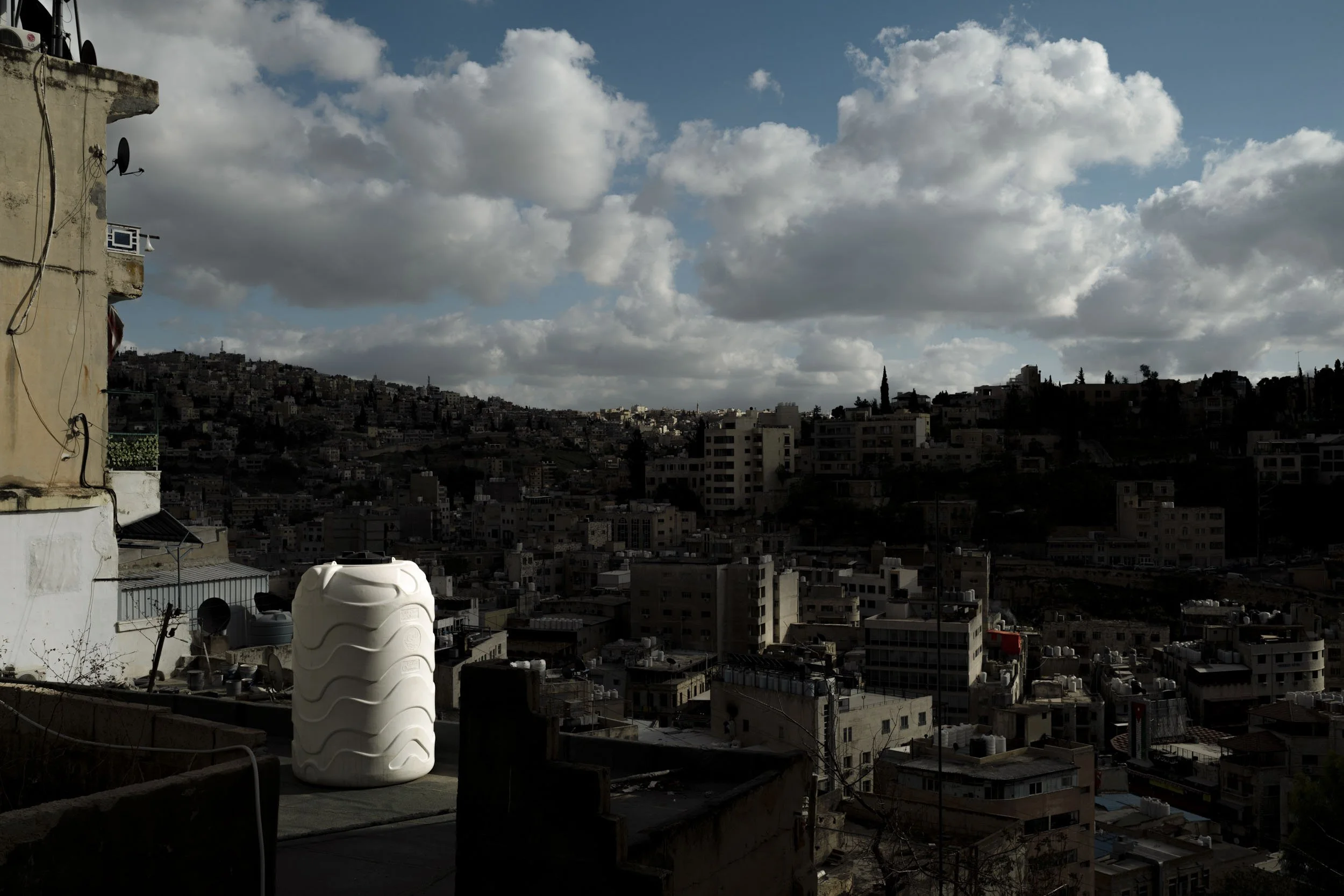
A water storage tank on the roof of a residential building in Amman, Jordan.

Tarik's car being washed in Wadi Musa, Jordan.
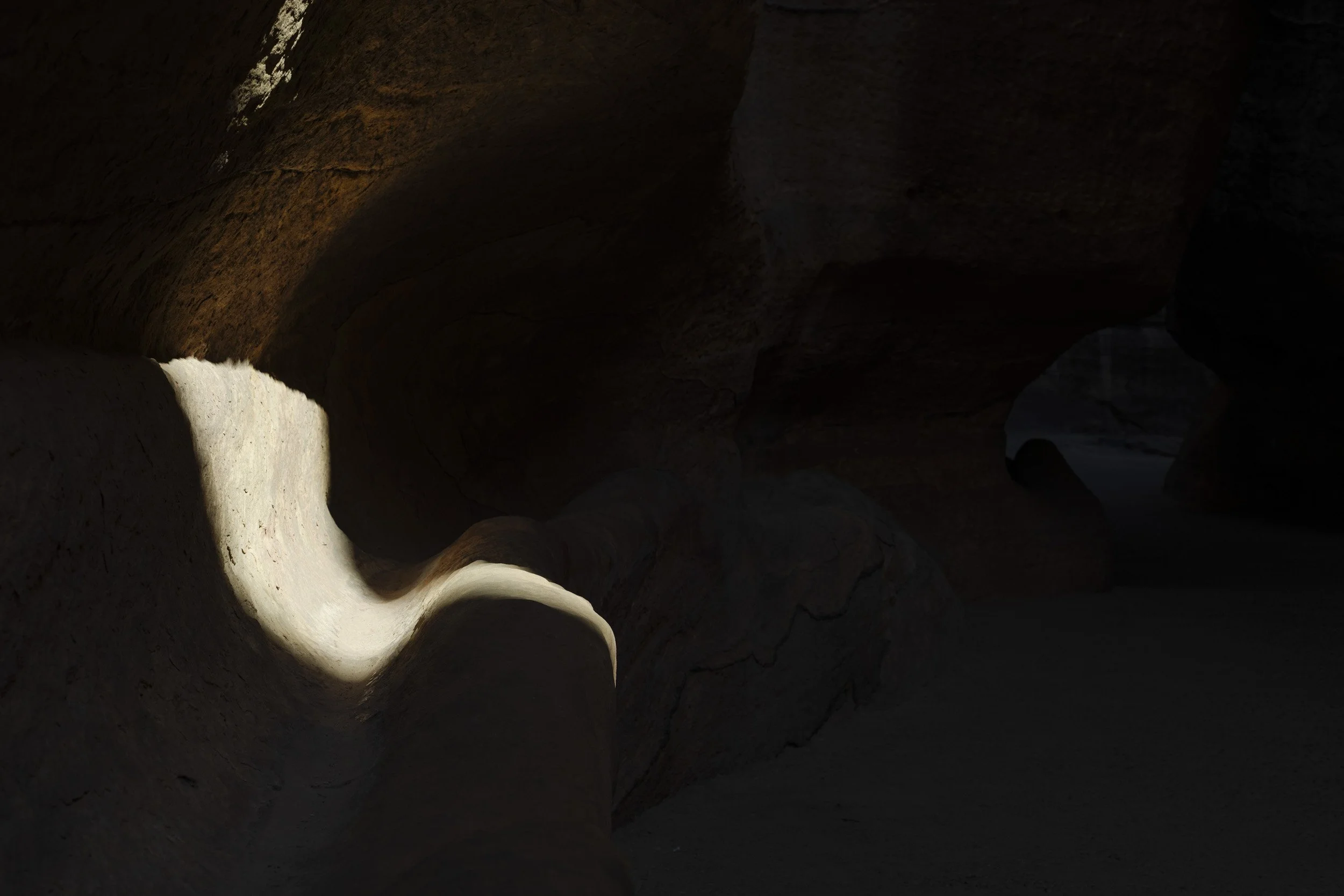
A rock-cut water channel in Petra, Jordan. The Nabataeans developed an extensive network of channels, cisterns and reservoirs to collect, transport and store water in the arid landscape.
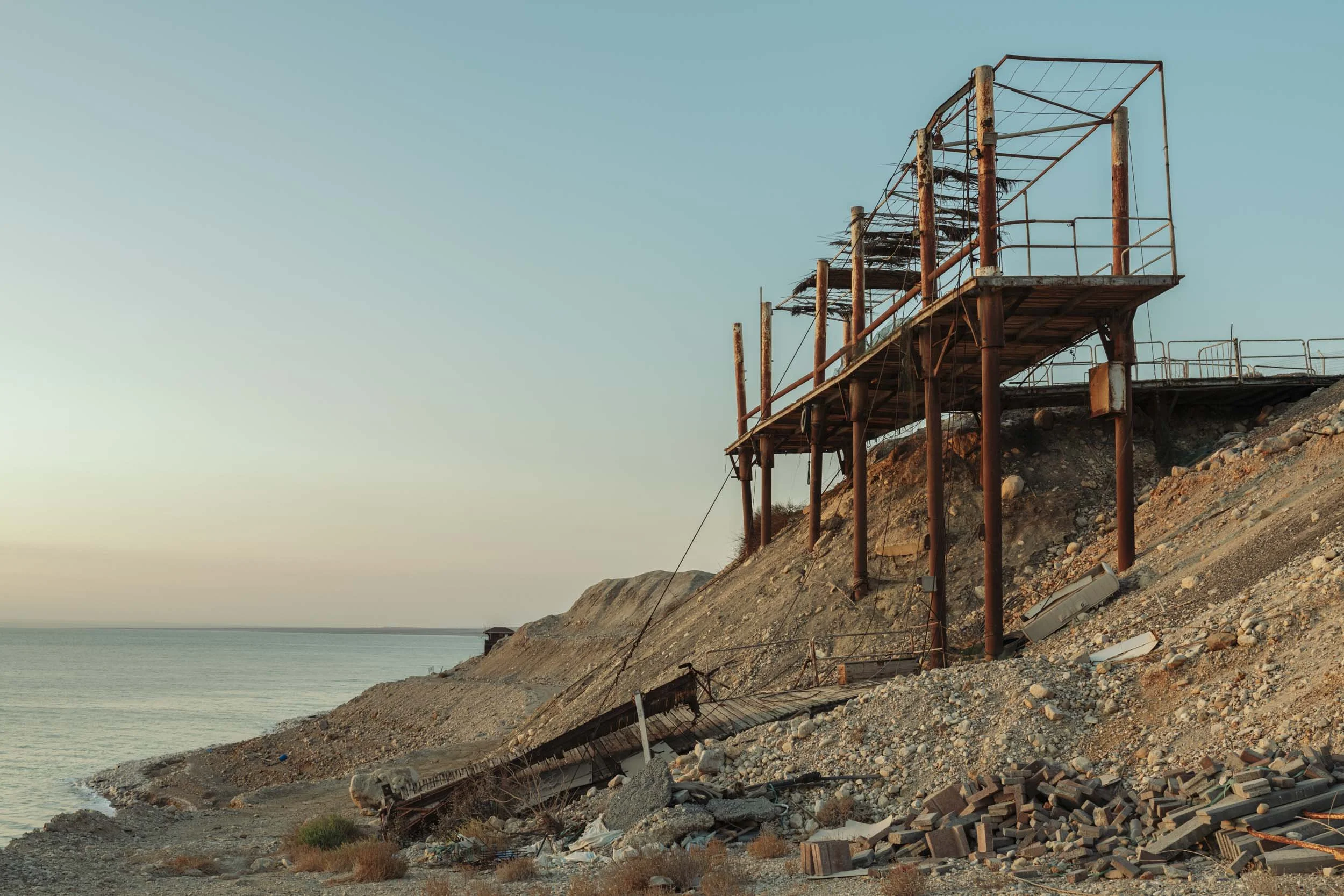
An abandoned pier overlooking the Dead Sea, standing above the receding shoreline and marking a former water level.
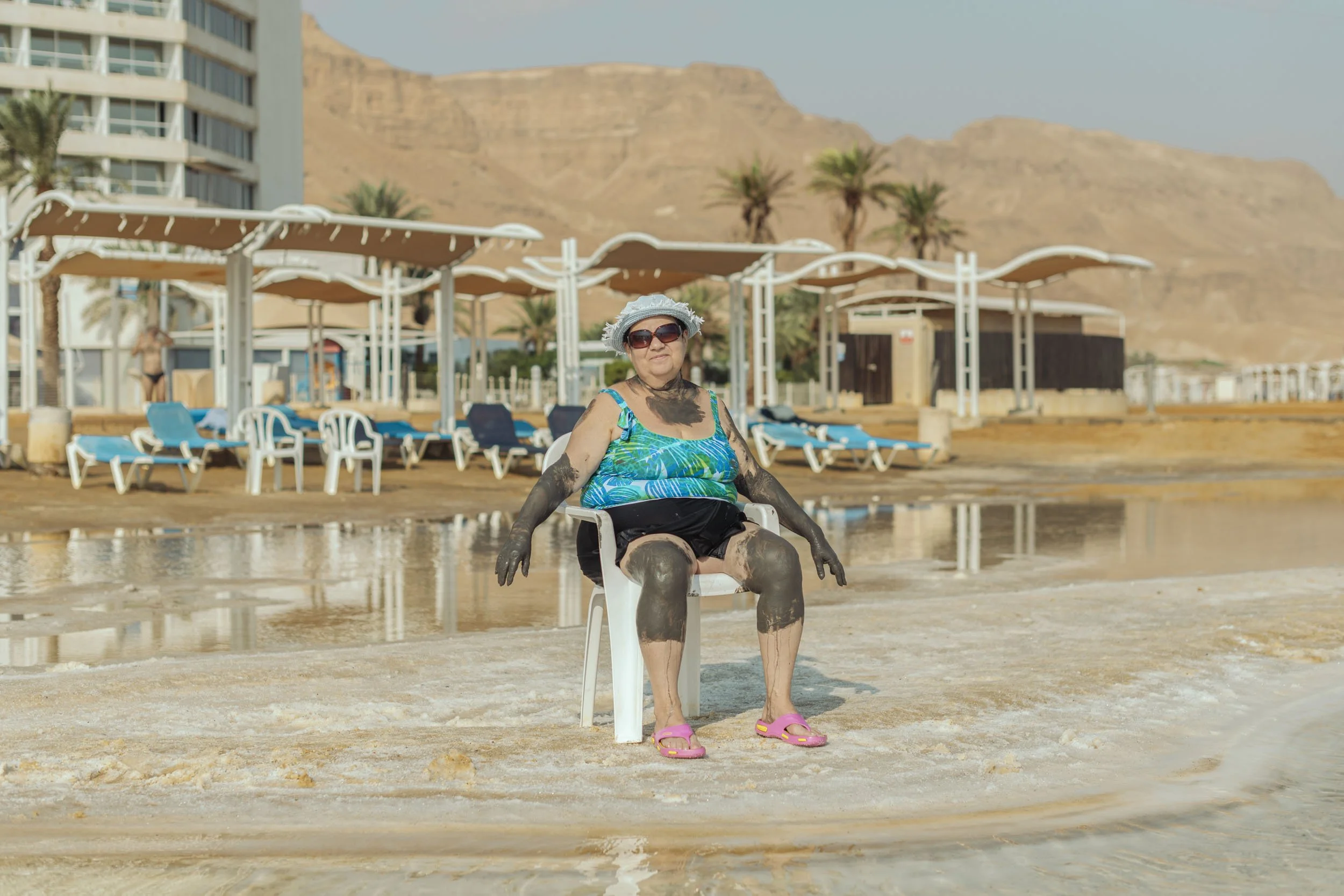
A retired Russian tourist covers herself in the mineral-rich mud of the Dead Sea at Ein Bokek, Israel.
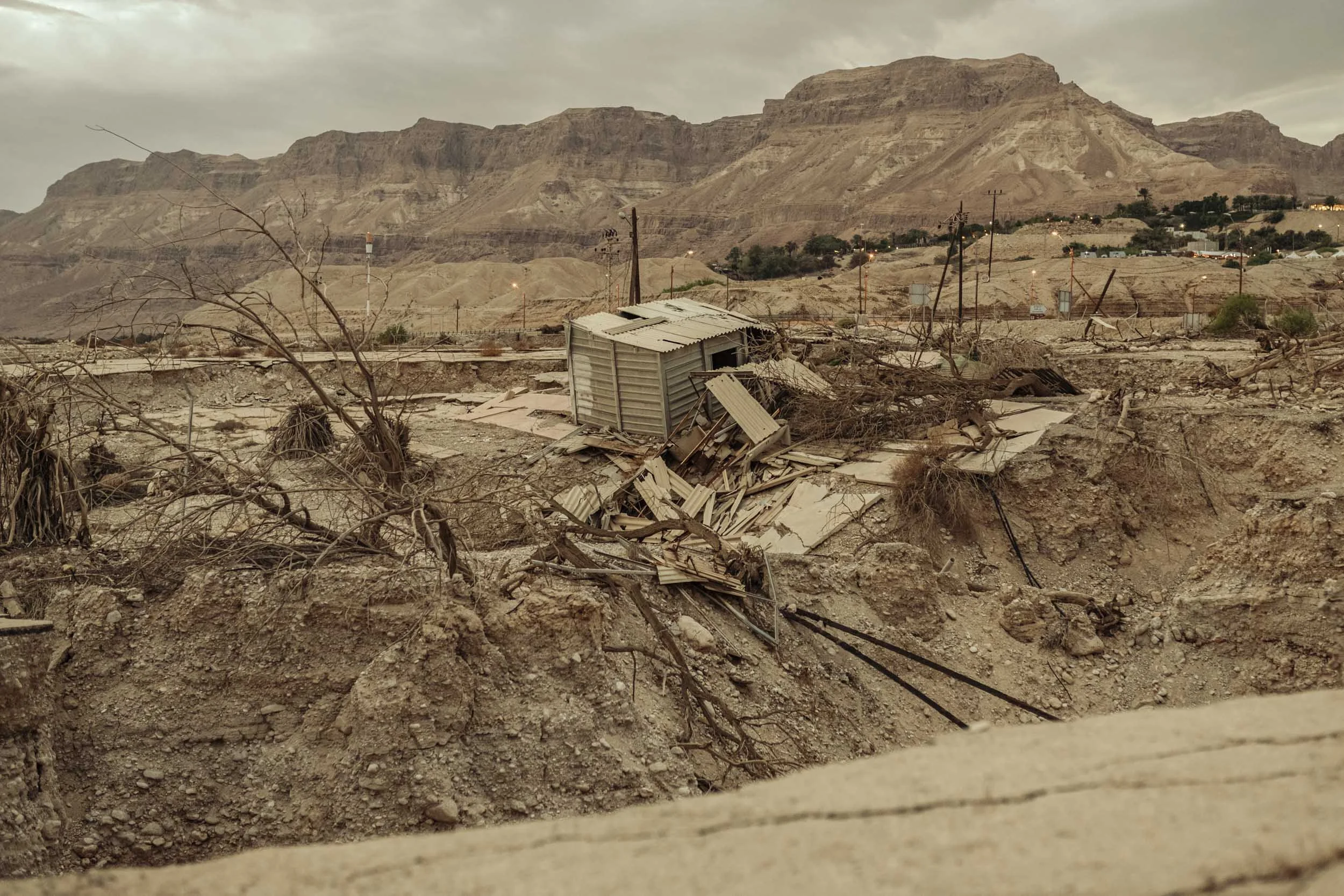
An area affected by sinkhole formation along the Israeli shore of the Dead Sea.

The Water Fairy, a Roman-era carved stone head depicting a water nymph, associated with the Nymphaeum in Amman, Jordan, and now housed in the Jordan Archaeological Museum.
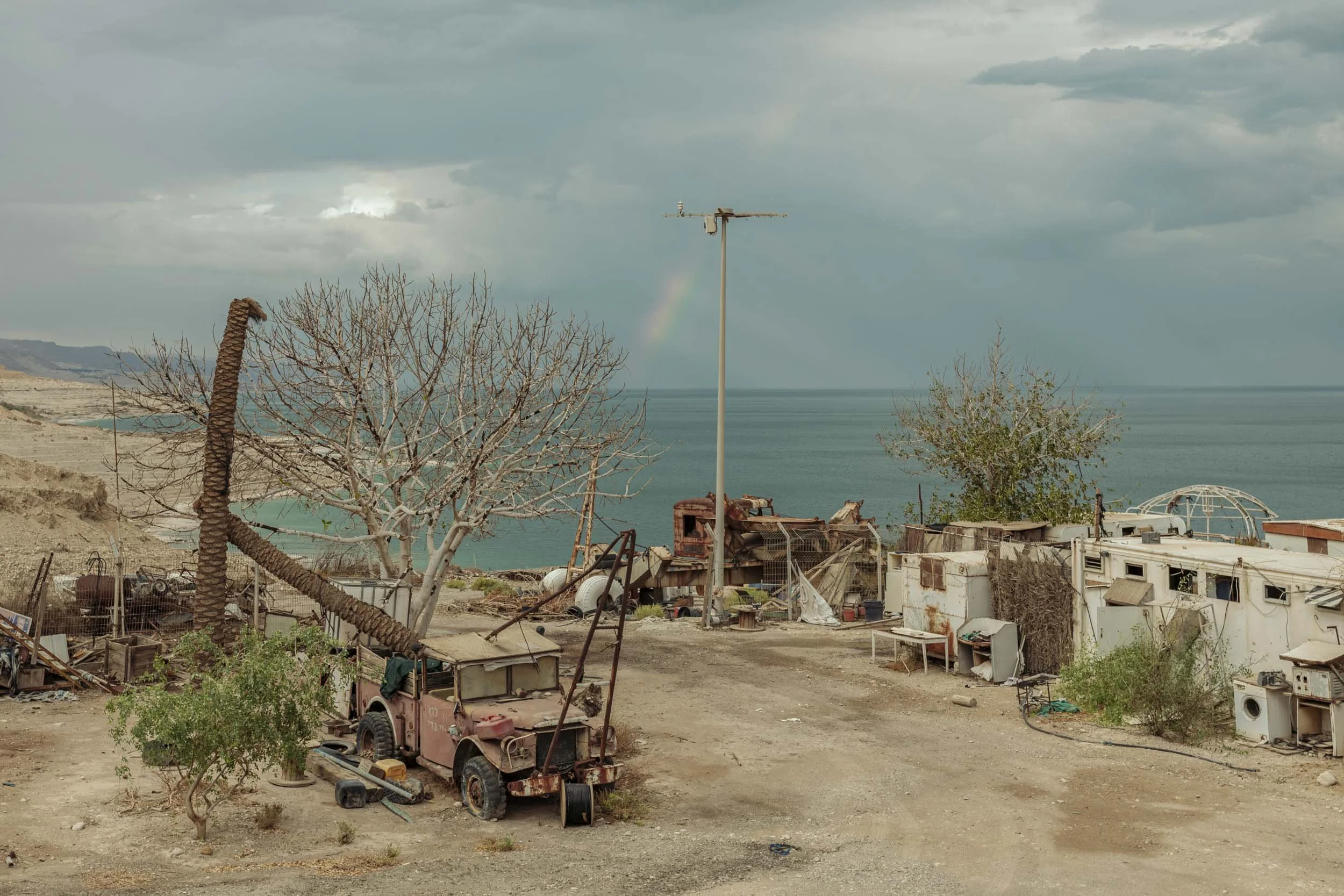
The abandoned home of a boat captain on the shores of the Dead Sea, Israel.
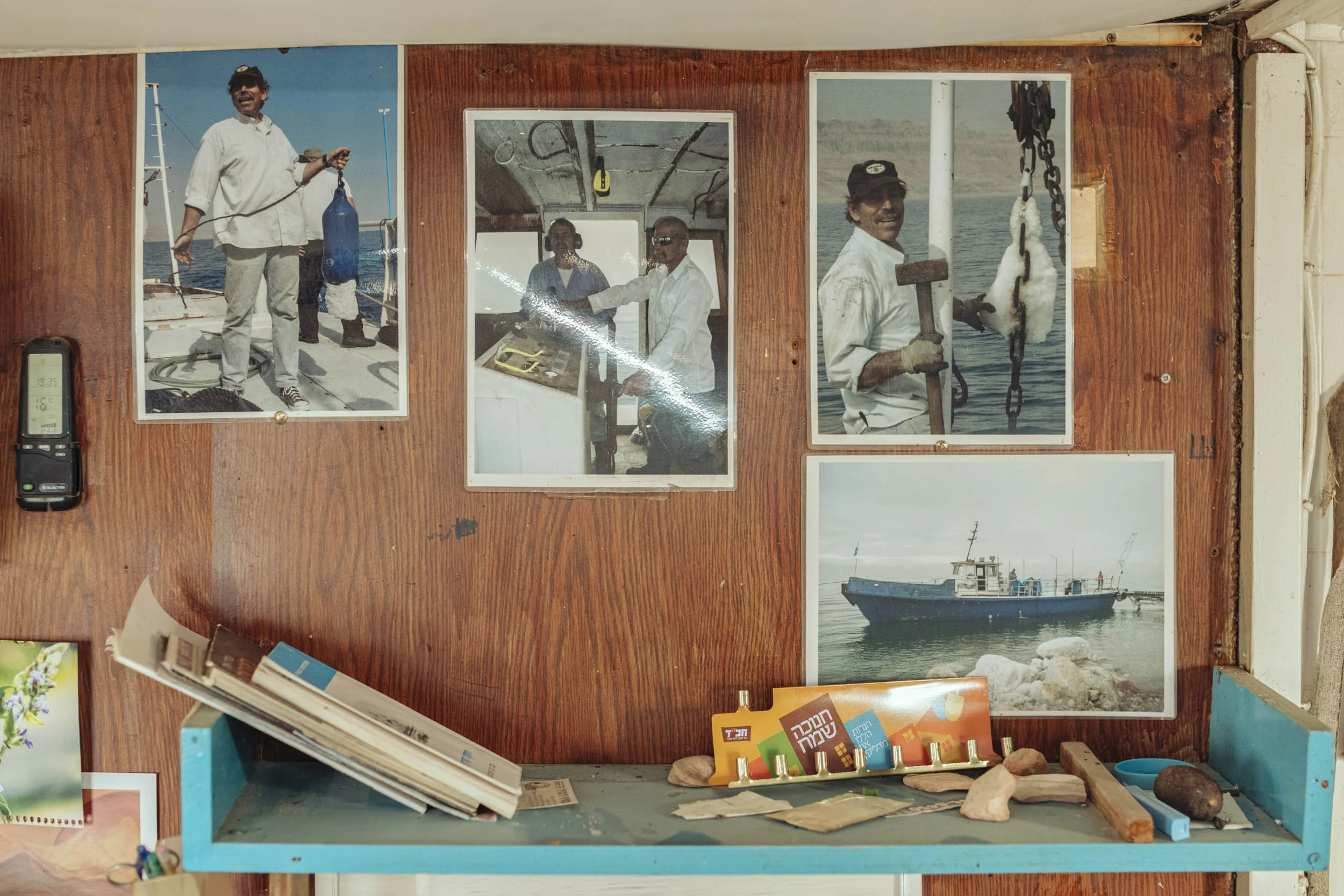
Photographs of a boat captain and his vessel inside his abandoned home near the Dead Sea, Israel.
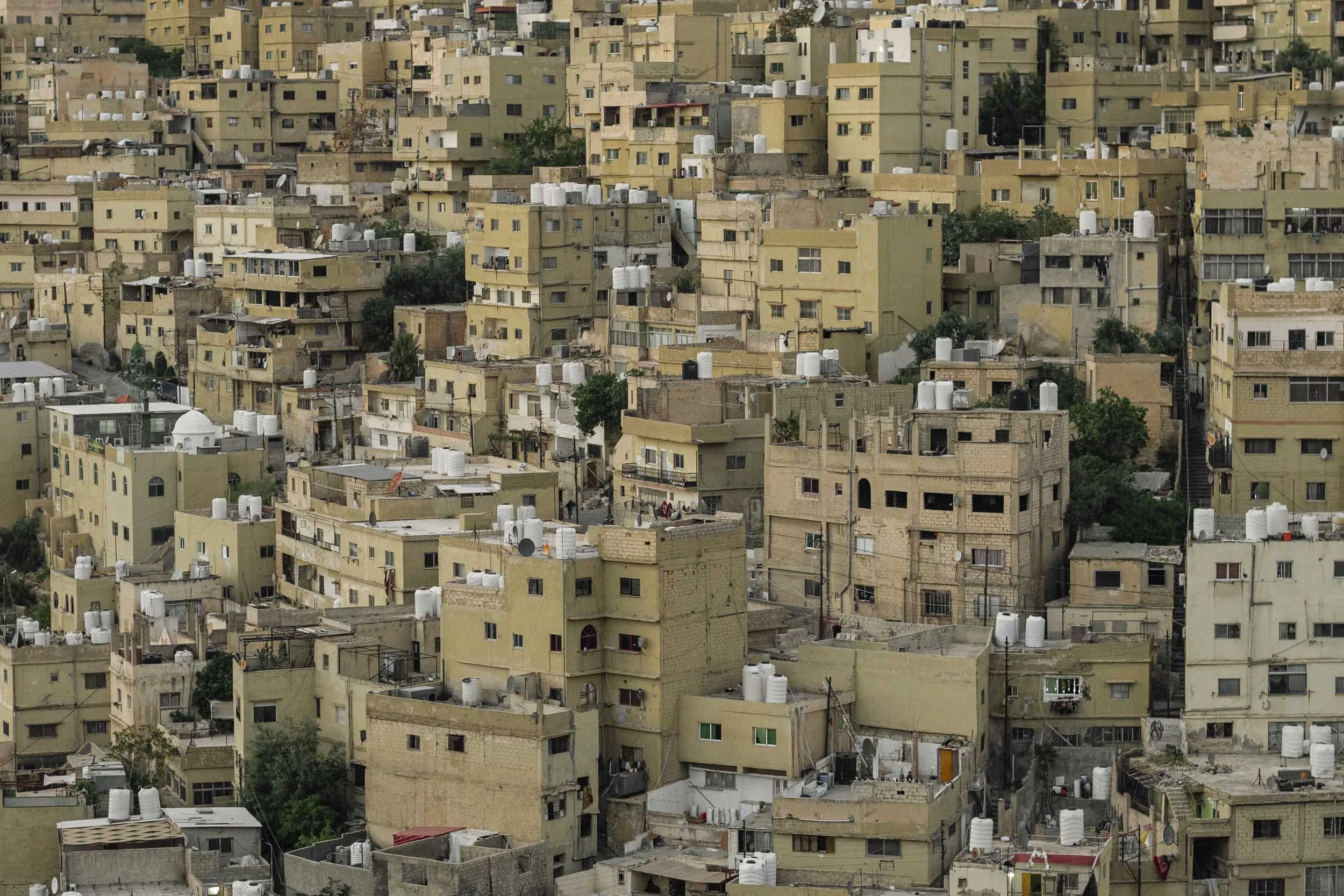
Water storage tanks on the rooftops of residential buildings in Amman, Jordan.
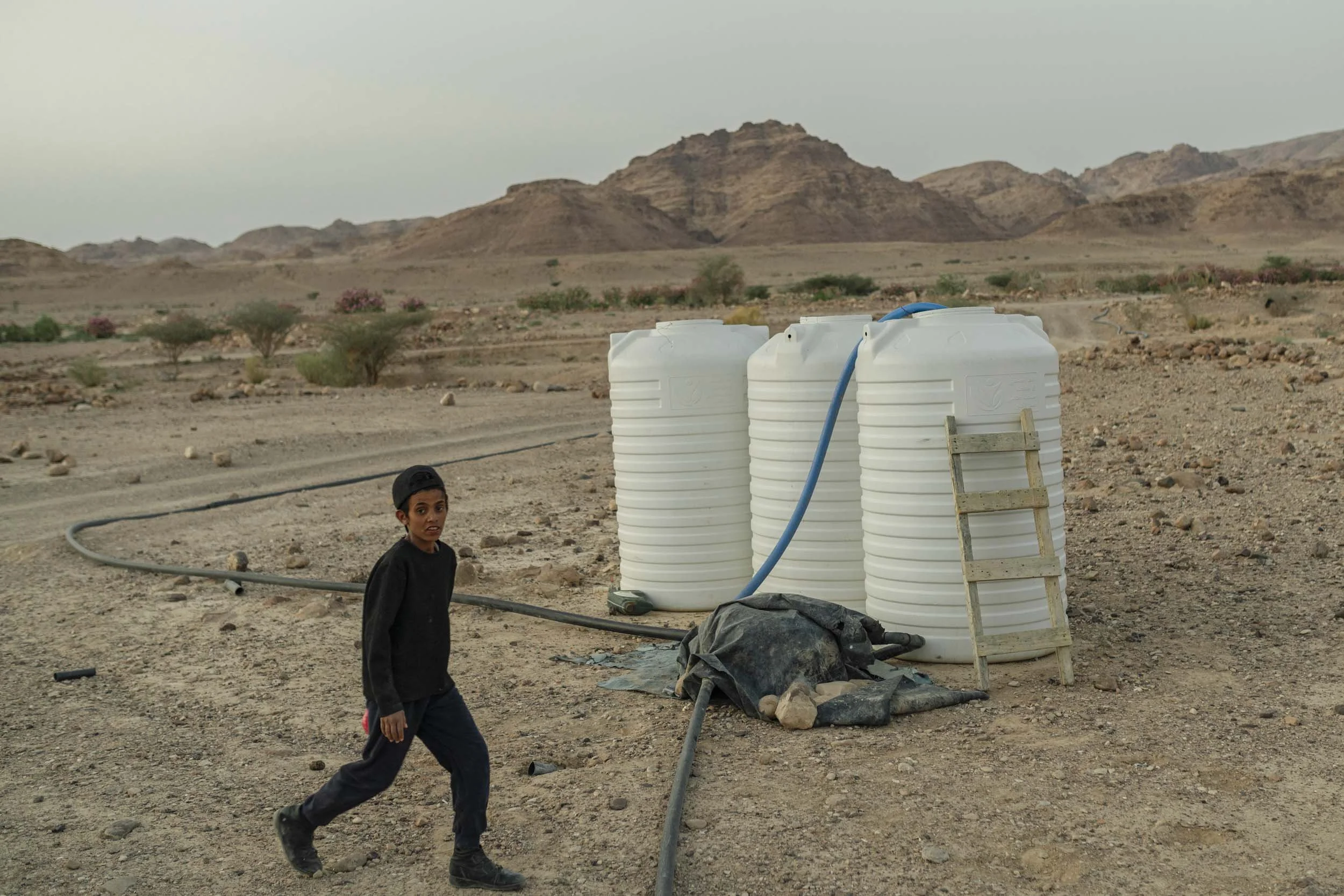
Water storage tanks in the Wadi Araba desert, Jordan.
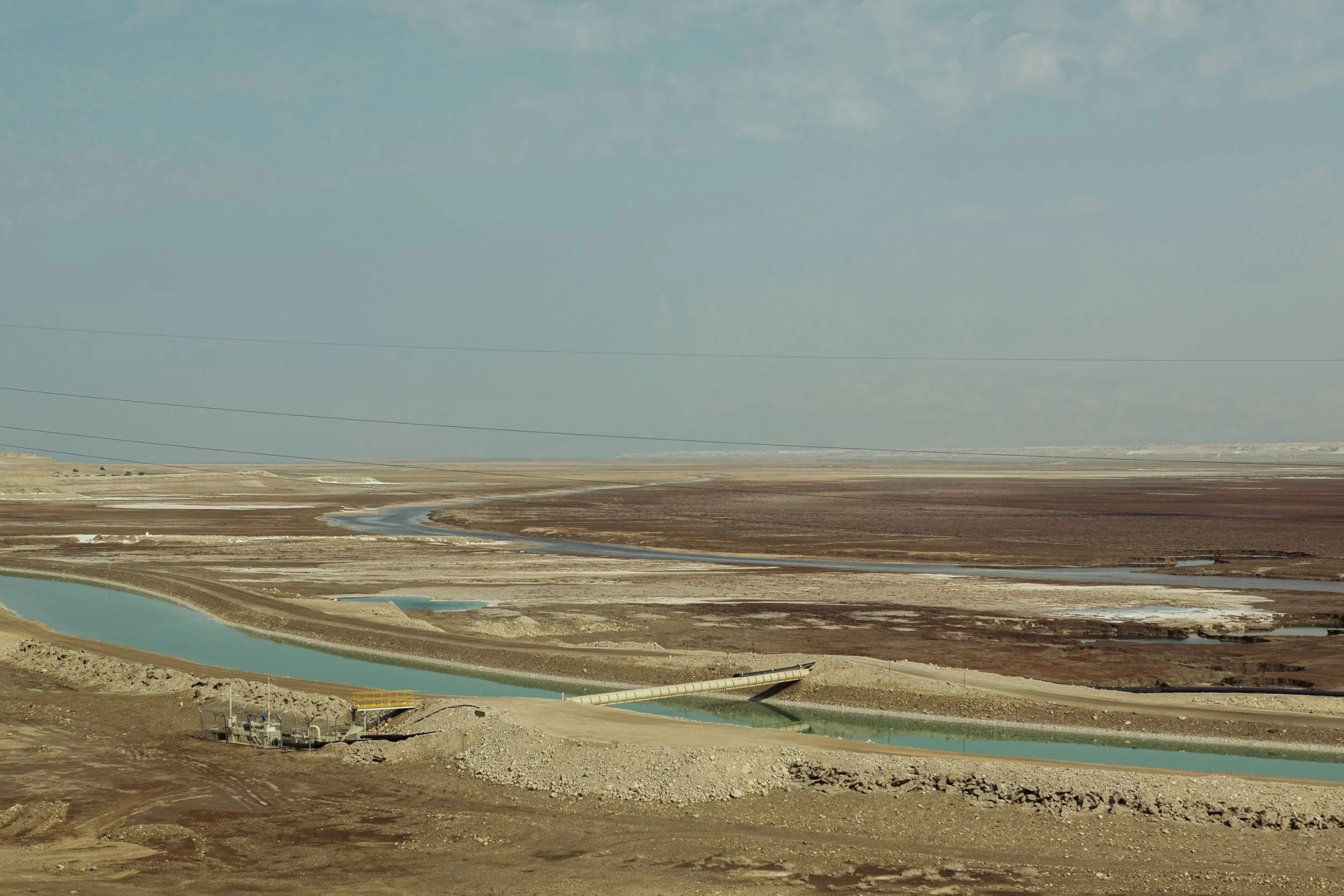
Water channels crossing the exposed bed of the Dead Sea.
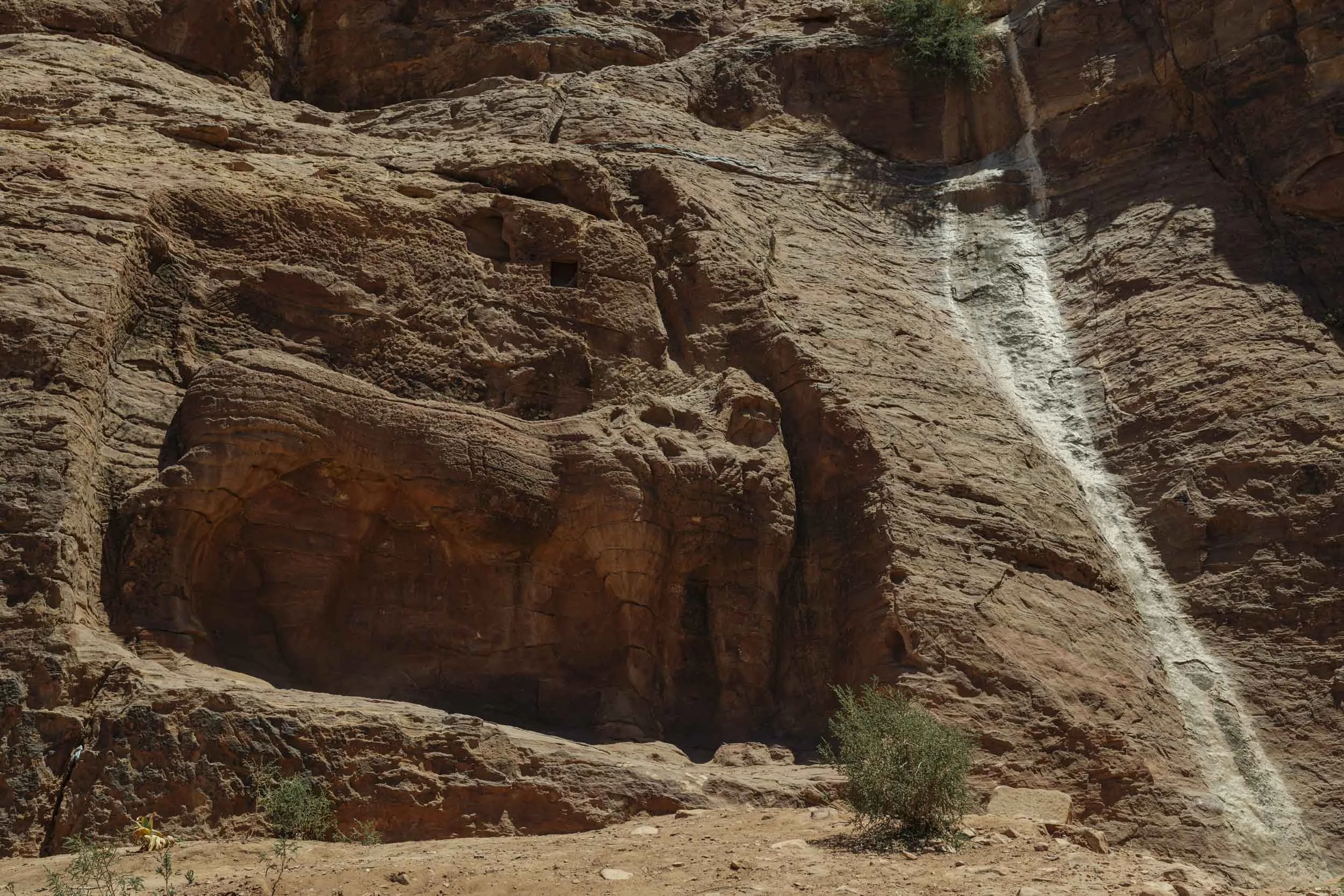
The Lion Fountain, carved into a sandstone cliff in Petra, Jordan. Water from the Ayn Braq spring once flowed through a channel above the lion relief into a basin below.
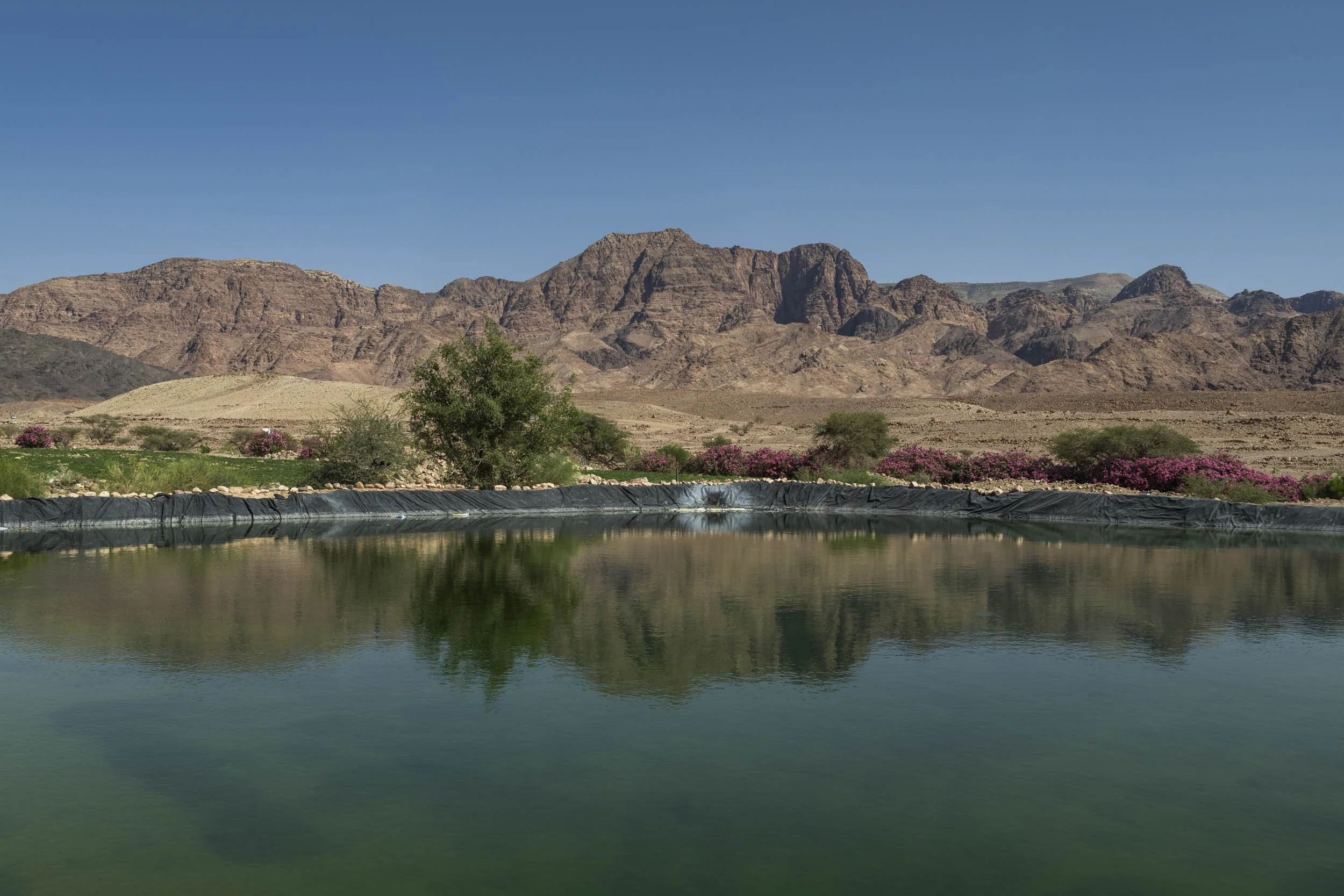
An artificial water reservoir in the Wadi Araba desert, Jordan.
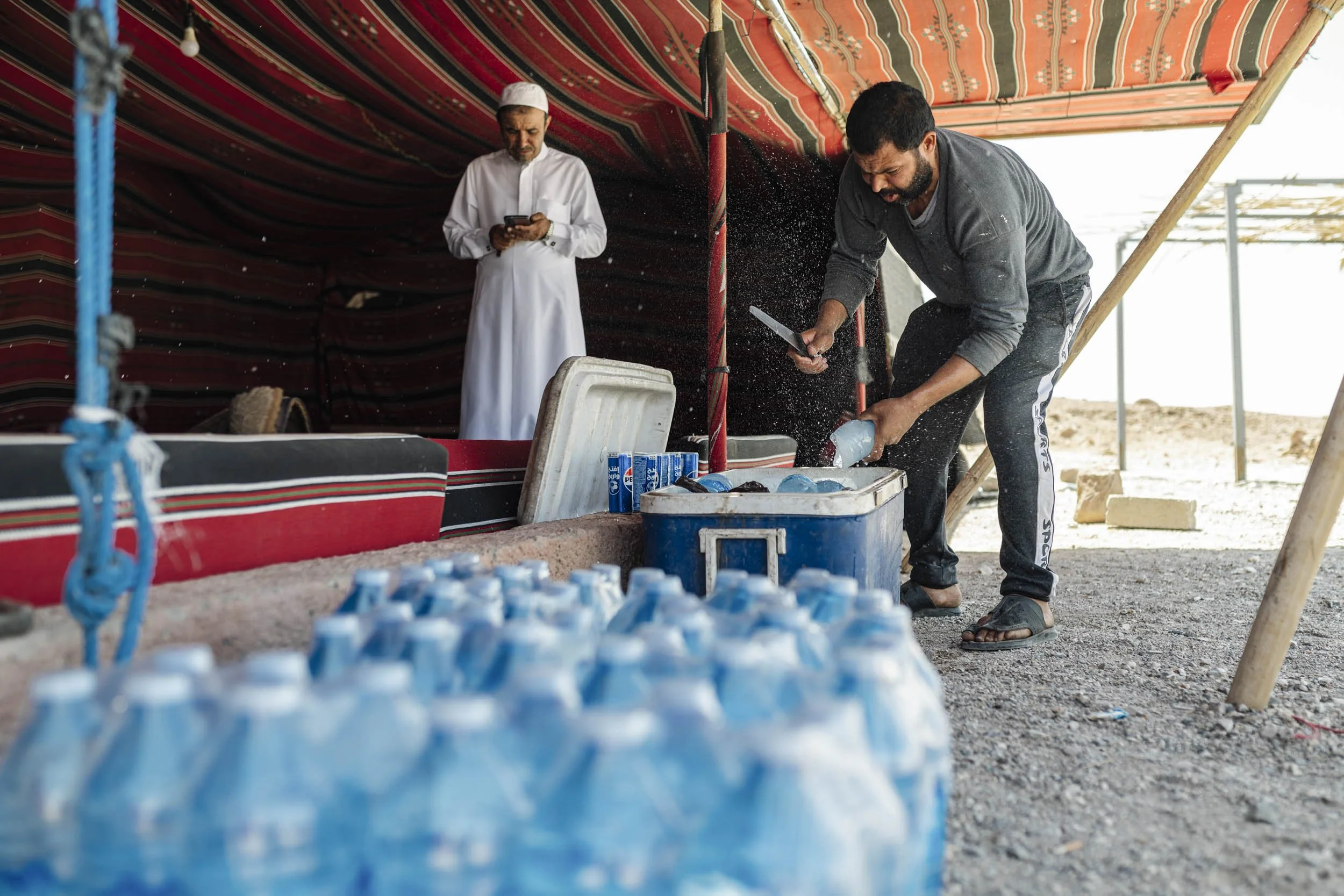
Essam breaks ice to cool drinking water for hikers at a campsite in the Wadi Araba desert, Jordan.
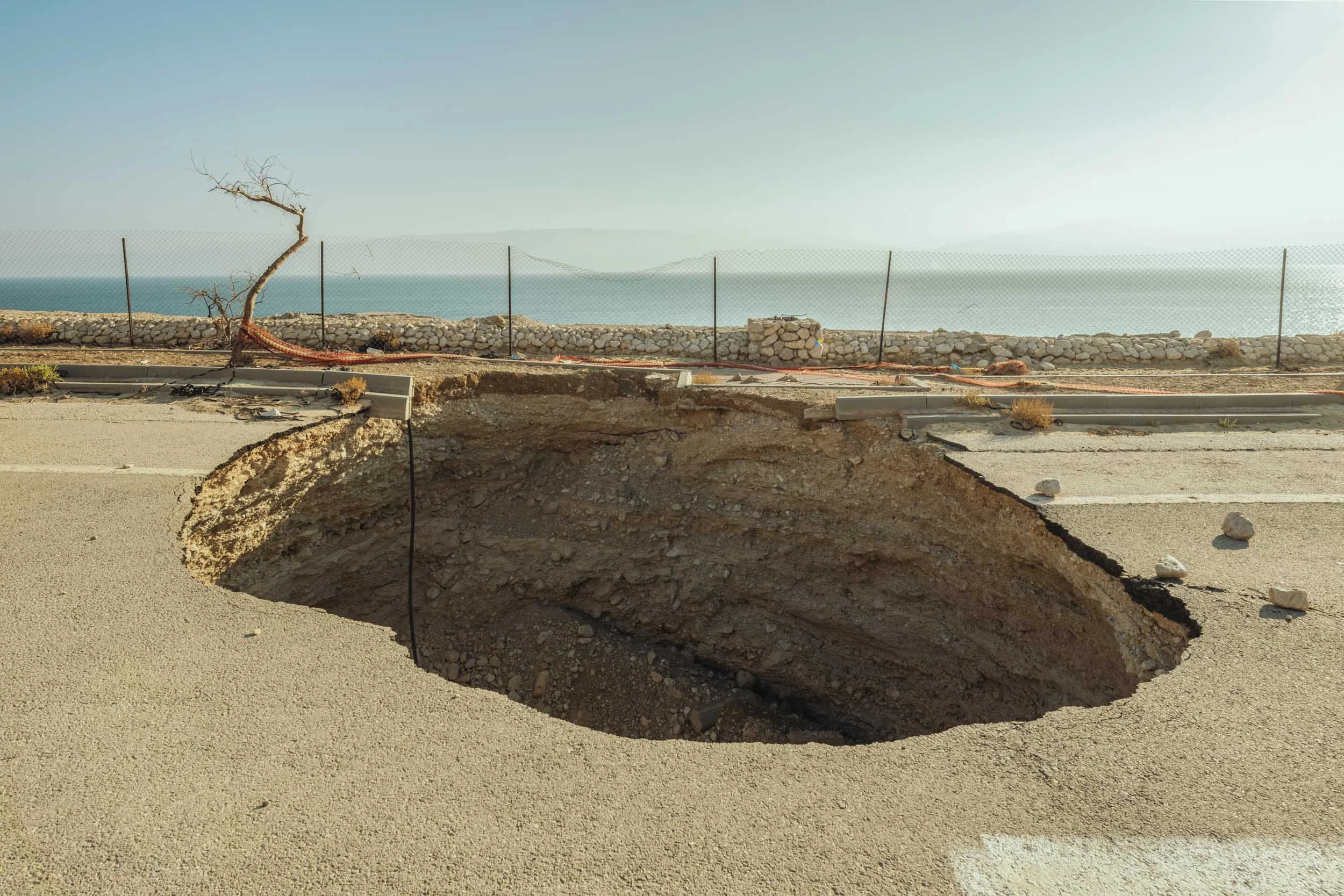
A sinkhole along the Israeli shore of the Dead Sea.
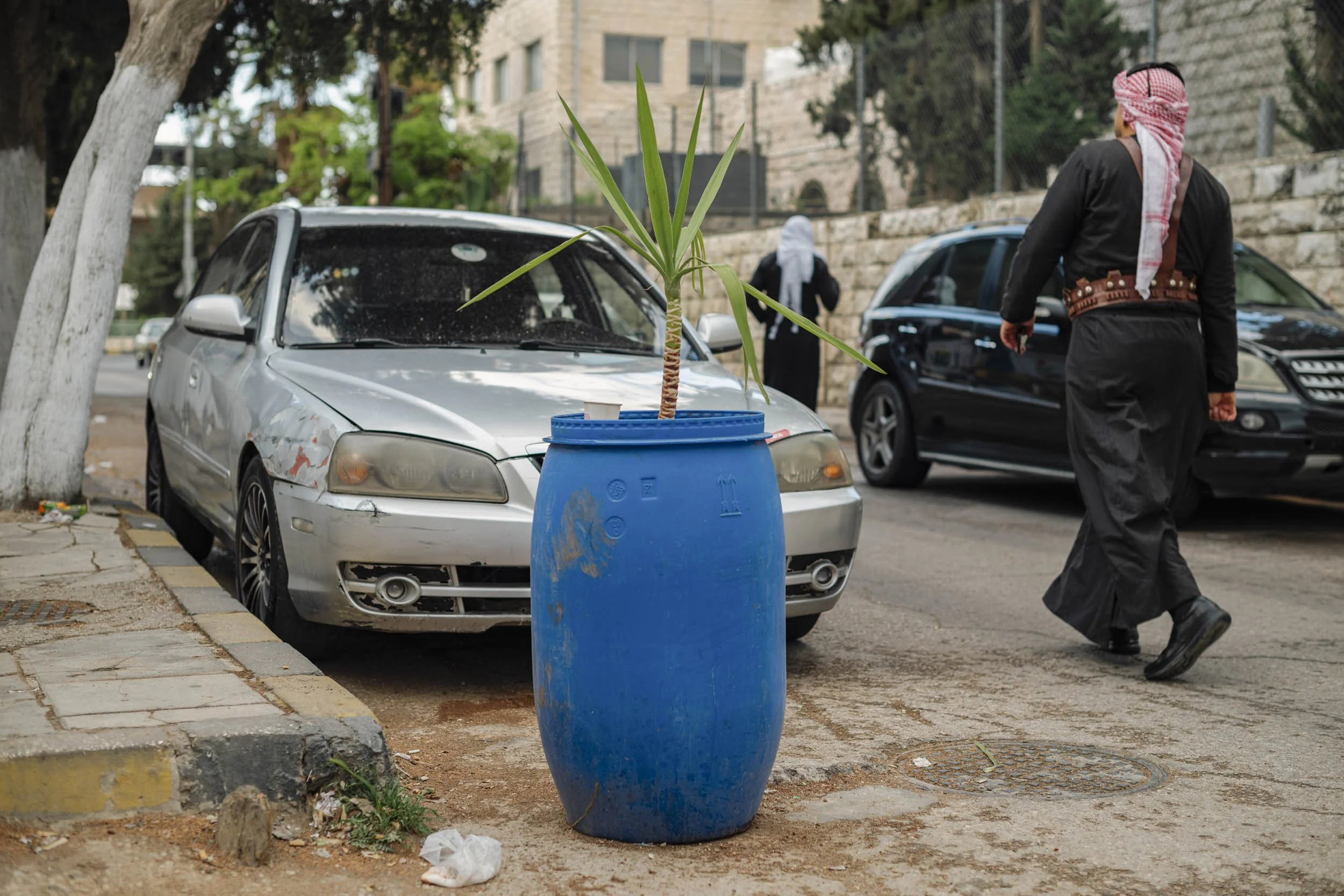
A plant growing out of a barrel in Amman, Jordan.

A section of the collapsing shoreline of the Dead Sea, Israel.
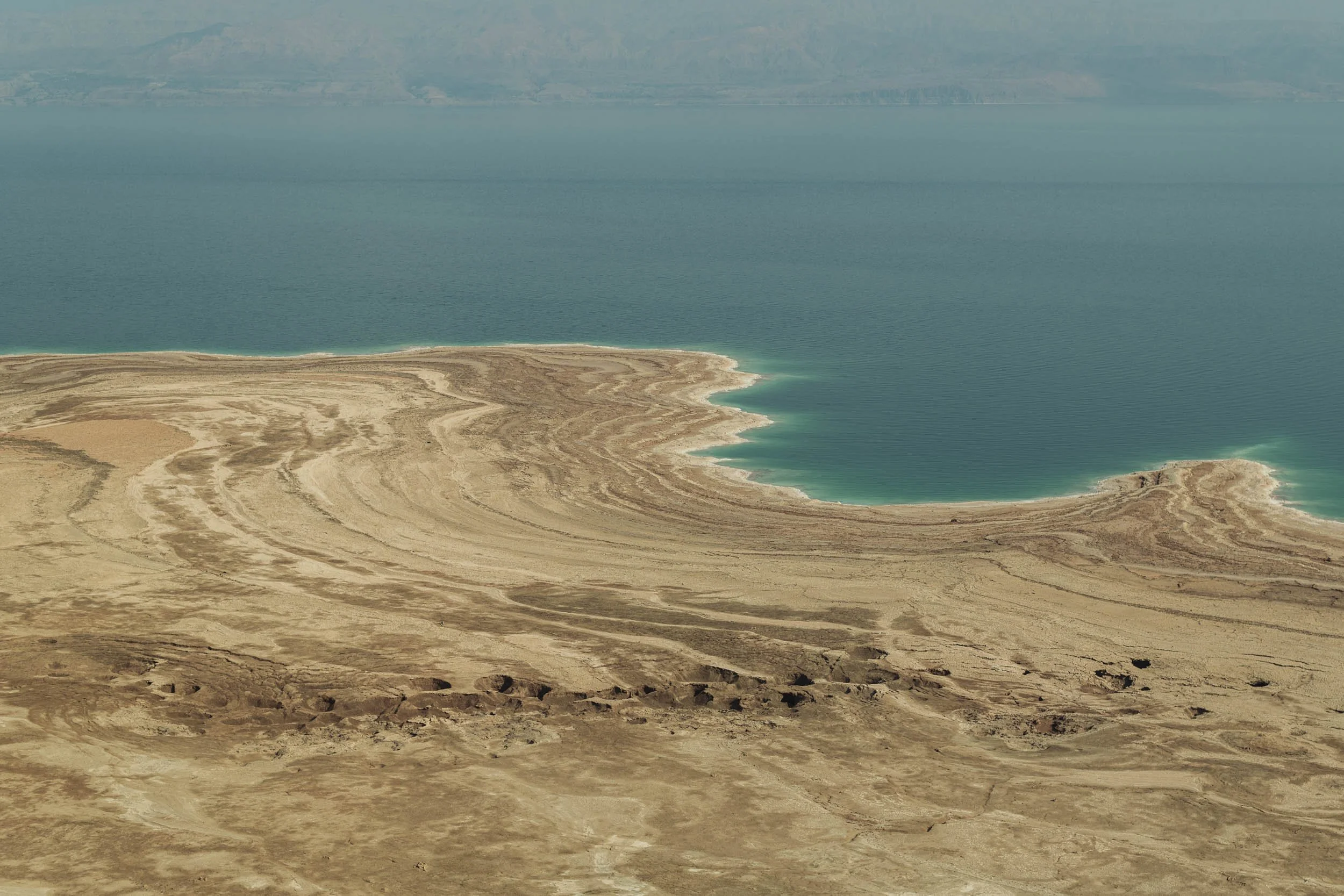
Sinkholes and exposed terrain along the receding Israeli shoreline of the Dead Sea.